
- About
- Vision & Mission
- PEO/ PSO/ PO
- HOD
- Faculty
- Academics
- Faculty Achievements
- Student Achievements
- Committees
- Laboratories
- Course Instruction Method
- Technical Activities
- Value Added Courses
About
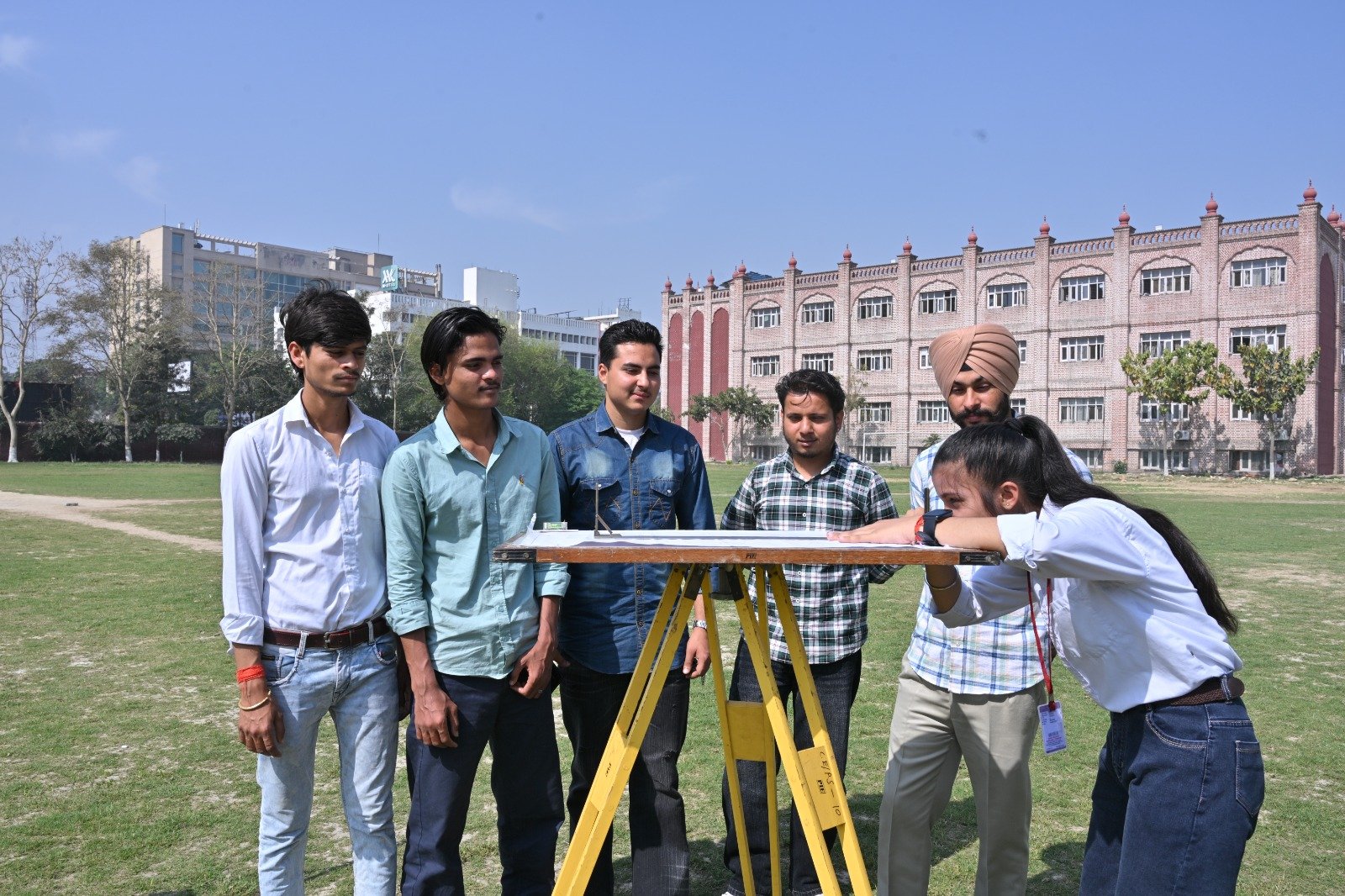
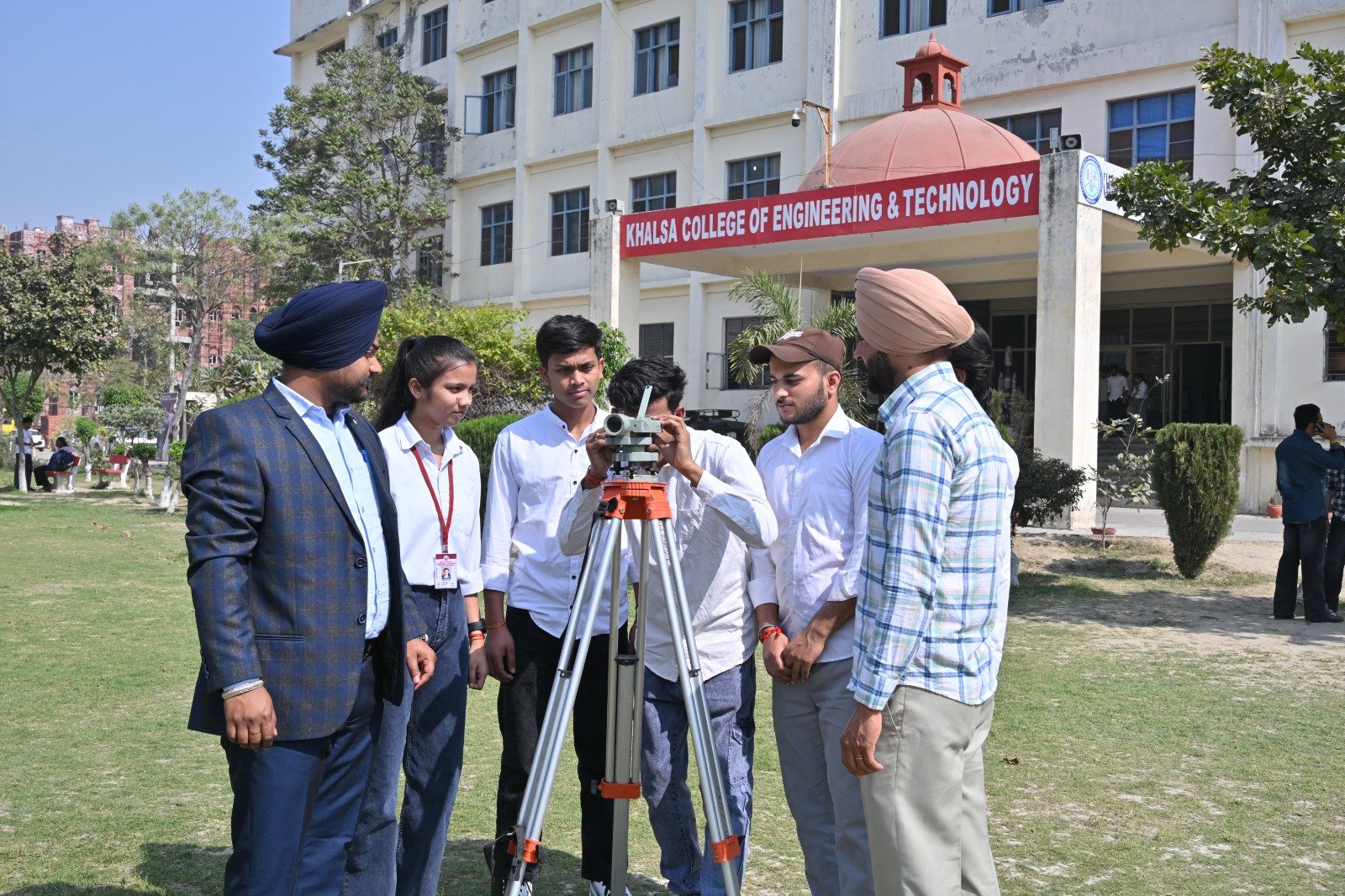
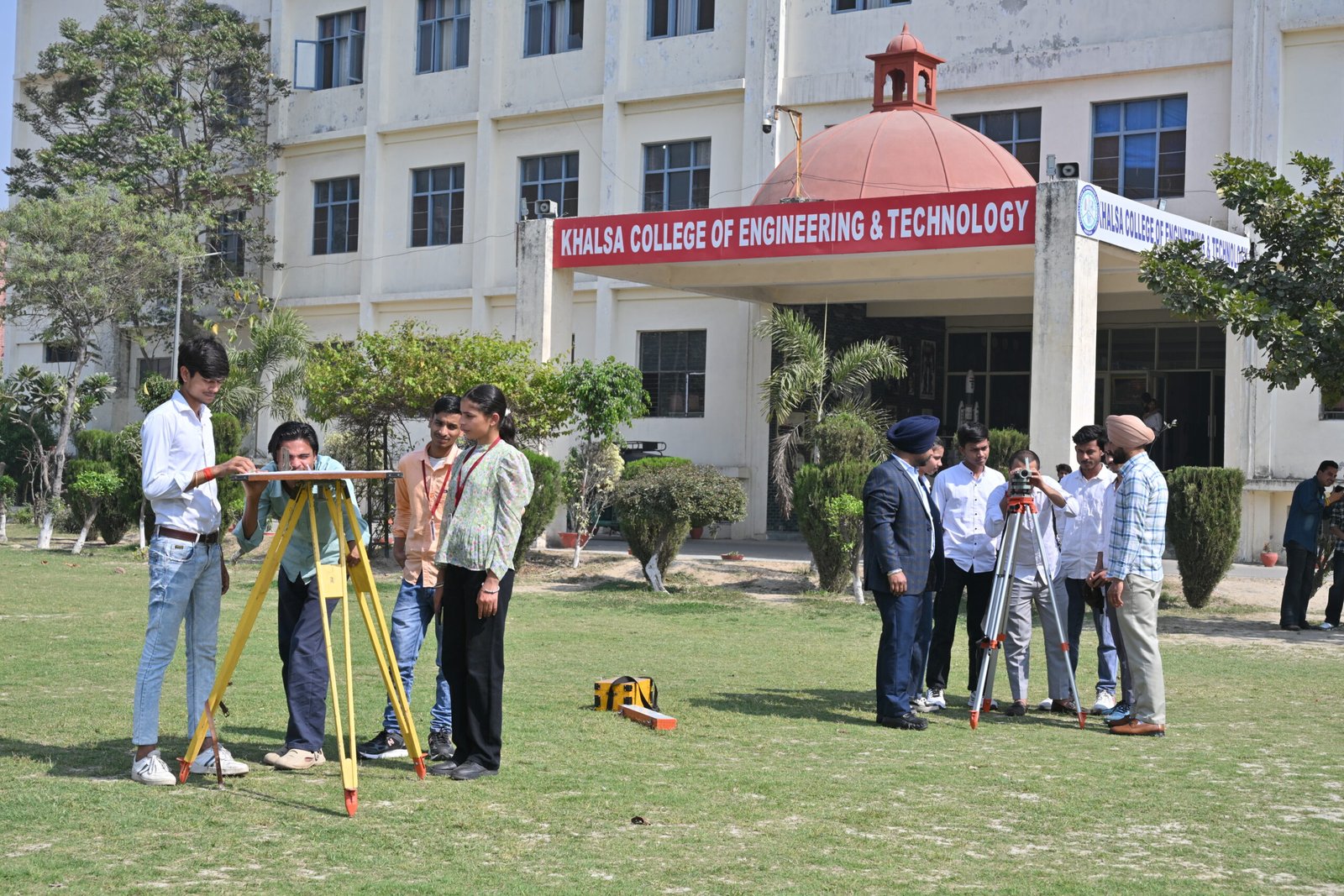
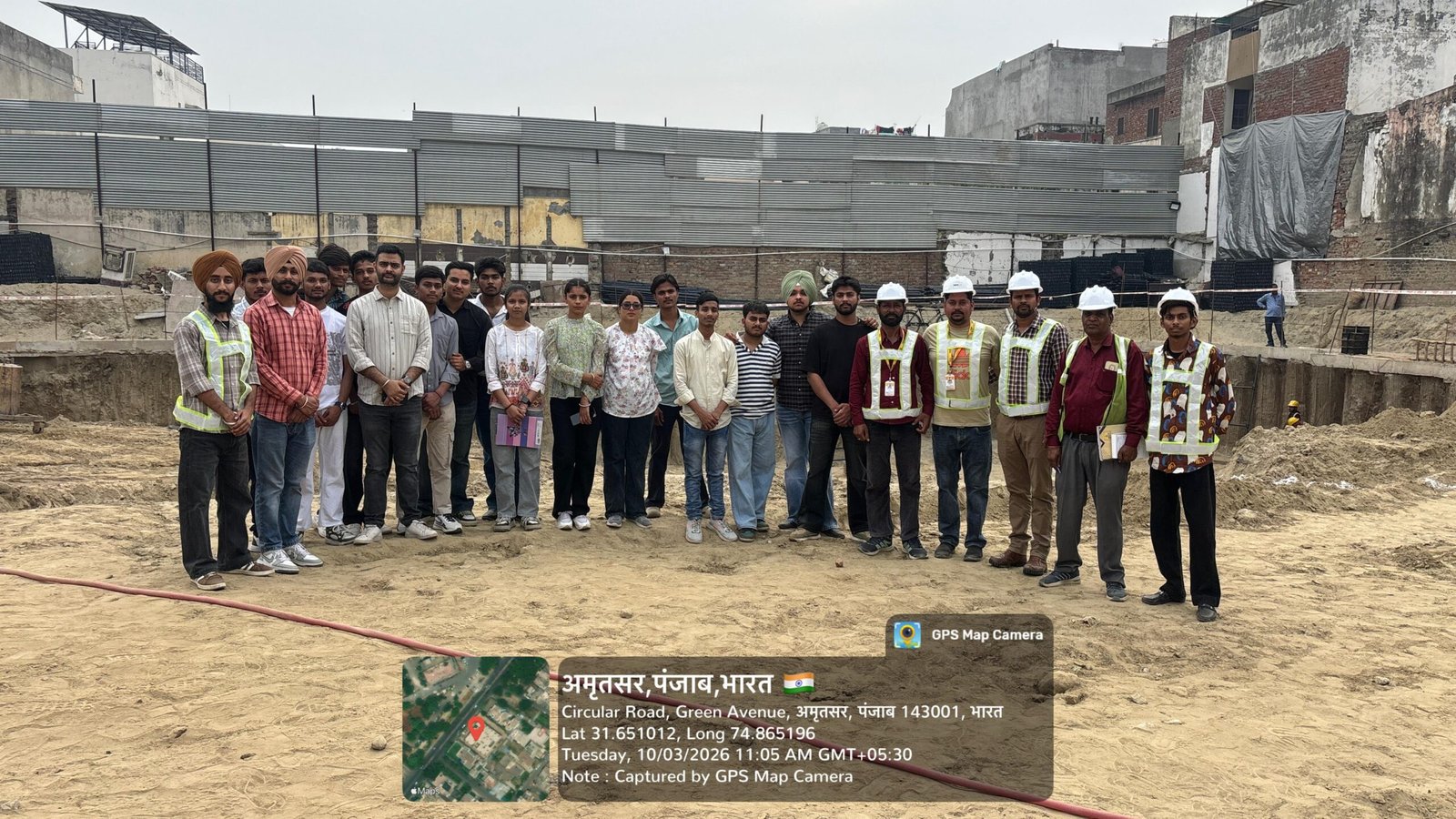
Civil engineering is a branch of engineering that deals with the design, construction, and maintenance of the built environment, including buildings, roads, bridges, water and sewage systems, and other infrastructure. Civil engineers play a crucial role in creating and maintaining the infrastructure around us, from the buildings we live and work in to the transportation systems that connect communities. Civil engineering involves the application of scientific and engineering principles to solve complex problems related to the built environment. This can include developing blueprints and design plans, overseeing construction projects, and conducting research to improve existing structures and systems. Civil engineers work closely with architects, construction workers, and other professionals to ensure that projects are completed on time, within budget, and to the highest standards of quality and safety. The Department of Civil Engineering was established in the year 2009. The Department offers 2 Programs Namely: B.Tech. in (Civil Engineering) and Diploma in (Civil Engineering). Department is equipped with well-qualified and dedicated faculty members to train students towards their holistic development. Currently, there are 07 members of faculty in the department of the best engineering college. The department provides students with learning mechanisms to develop their skills in the field as well as in academics. Students of B.Tech. Civil Engineering are facilitated with latest technologies in the field of civil engineering, servers, libraries with the latest Titles, NPTEL Course ware, and Journal salong side High-Bandwidth internet to facilitate effective learning. Students are imparted with training in cutting-edge technologies through Industrial visits, Seminars, Workshops and Guest Lectures alongside Technical Symposiums/paper contests; and co-curricular and Extracurricular events through the technical associations of the department.
Vision
Mission
• To conduct strong basic and applied research for national needs.
• To serve the construction industry, civil engineering profession, and rural community through dissemination of knowledge and technical services.
• To provide individual attention and enable personality building.
• To impart and promote entrepreneurship skills among students.
Program (Undergraduate)
❖ Level: UG
❖ Affiliation: I.K. G. Punjab Technical University
❖ Approval: AICTE, New Delhi
Program Educational Objectives (PEOs):
The program educational objectives (PEO) of the civil engineering program are that its graduates could demonstrate the following essential components of a successful engineer and/or consultant within two to four years after the graduation.
PEO1. To train the students so that they can work and contribute to the infrastructure development projects being undertaken by government and private or any other sector companies.
PEO2. To train students in such as a way that they can pursue higher studies so that they can contribute to the teaching profession/research and development of civil engineering and other allied fields.
PEO3. To train students in a manner that they should function effectively in the multicultural and multidisciplinary groups for the sustainable development and growth of civil engineering projects and profession.
Program Specific Outcomes (PSOs)
PSO1. The program graduates will apply knowledge of mathematics and physical sciences to analyses and solve the problems in core areas of civil engineering such as structural engineering, geotechnical engineering, environmental engineering and surveying.
PSO2. The program graduates will design a system, component, or process in structural, geotechnical and environmental engineering to meet desired needs within realistic constraints such as economic, environmental, social, health and safety, and sustainability.
PSO3. The program graduates will function and communicate effectively in multi-disciplinary team environment and implement principles of project management with an understanding of professional and ethical responsibility.
Program Outcomes (POs)
PO I: Engineering Knowledge: Apply the knowledge of mathematics, science, engineering fundamentals, and an engineering specialization to the solution of complex engineering problems.
PO II: Problem Analysis: Identify, formulate, review research literature, and analyze complex engineering problems, reaching substantiated conclusions using first principles of mathematics, natural sciences and engineering sciences.
PO III: Design/Development of Solutions: Design solutions for complex engineering problems and design system components or processes that meet the specified needs with appropriate consideration for the public health and safety and the cultural, societal, and environmental considerations.
PO IV: Conduct Investigations of Complex Problems: Use research-based knowledge and research methods, including design of experiments, analysis and interpretation of data, and synthesis of the information to provide valid conclusions.
PO V: Modern Tool Usage: Create, select, and apply appropriate techniques, resources, and modern engineering and IT tools, including prediction and modeling, to complex engineering activities with an understanding of the limitations.
PO VI: The Engineer and Society: Apply reasoning informed by the contextual knowledge to assess societal, health, safety, legal, and cultural issues and the consequent responsibilities relevant to the professional engineering practice.
PO VII: Environment and Sustainability: Understand the impact of the professional engineering solutions in societal and environmental contexts and demonstrate the knowledge of and need for sustainable development.
PO VIII: Ethics: Apply ethical principles and commit to professional ethics and responsibilities and norms of the engineering practice.
PO IX: Individual and Team Work: Function effectively as an individual and as a member or leader in diverse teams, and in multidisciplinary settings.
PO X: Communication: Communicate effectively on complex engineering activities with the engineering community and with society at large, such as being able to comprehend and write effective reports and design documentation, make effective presentations, and give and receive clear instructions.
PO XI: Project Management and Finance: Demonstrate knowledge and understanding of the engineering and management principles and apply these to one’s own work, as a member and leader in a team, to manage projects and in multidisciplinary environments.
PO XII: Life-long Learning: Recognize the need for, and have the preparation and ability to engage in independent and life-long learning in the broadest context of technological change.
Program (Diploma)
❖ Course Name: Diploma-Civil Engineering (3 Years)
❖ Level: UG
❖ Affiliation: Punjab State Board of Technical Education and Industrial Training
❖ Approval: AICTE, New Delhi
Program Educational Objectives (PEOs):
The program educational objectives (PEO) of the civil engineering program are that its graduates could demonstrate the following essential components of a successful engineer and/or consultant within two to four years after the graduation.
PEO1. To train the students so that they can work and contribute to the infrastructure development projects being undertaken by government and private or any other sector companies.
PEO2. To train students in such as a way that they can pursue higher studies so that they can contribute to the teaching profession/research and development of civil engineering and other allied fields.
PEO3. To train students in a manner that they should function effectively in the multicultural and multidisciplinary groups for the sustainable development and growth of civil engineering projects and profession.
Program Specific Outcomes (PSOs)
PSO1. The program graduates will apply knowledge of mathematics and physical sciences to analyses and solve the problems in core areas of civil engineering such as structural engineering, geotechnical engineering, environmental engineering and surveying.
PSO2. The programme graduates will design a system, component or process in structural, geotechnical and environmental engineering to meet desired needs within realistic constraints such as economic, environmental, social, health and safety, and sustainability.
PSO3. The programme graduates will function and communicate effectively in multi-disciplinary team environment and implement principles of project management with an understanding of professional and ethical responsibility.
Program Outcomes (POs)
i) Basic and discipline-specific knowledge: Apply knowledge of basic mathematics, science, and engineering fundamentals and engineering specialization to solve the engineering problems.
ii) Problem analysis: Identify and analyse well-defined engineering problems using codified standard methods.
iii) Design/development of solutions: Design solutions for well-defined technical problems and assist with the design of systems components or processes to meet specified needs.
iv) Engineering Tools, Experimentation and Testing: Apply modern engineering tools and appropriate technique to conduct standard tests and measurements.
v) Engineering practices for society, sustainability, and environment: Apply appropriate technology in context of society, sustainability, environment, and ethical practices.
vi) Project Management: Use engineering management principles individually, as a team member, or as a leader to manage projects and effectively communicate about well-defined engineering activities.
vii) Life-long learning: Ability to analyze individual needs and engage in updating in the context of technological changes.
Head of Department
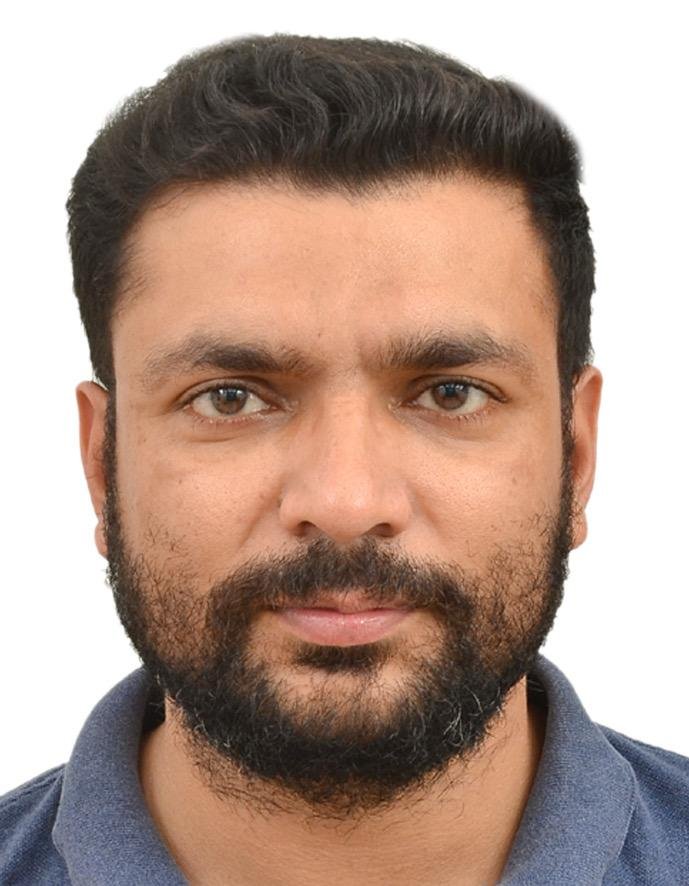
Dr. Prince Karandeep Singh
HOD
Email id: hod.civil@kcet.co.in
HOD Message
Welcome to the Department of Civil Engineering
The work we do as practicing and future engineers is critical for an ever-changing world. Civil Engineers design infrastructure that powers our modern society, such as roads, bridges, buildings and water distribution systems. Civil engineers are creating a stronger, safer and more sustainable world, which we call the Built Environment.
Our department offers highest quality academic programs supported by laboratory facilities. Our faculty is dedicated to excellence in teaching while fostering an inclusive learning environment where everyone can thrive.
Our department also offers consultancy services and testing to the industrial belt of Punjab.
Our alumni work in exciting careers and leadership roles around the globe, meeting the complex engineering challenges we face today. If you picture yourself in a dynamic, meaningful career, a degree in Civil Engineering may be for you. I invite you to explore our academic programs for strategic direction for the future.
Faculty
| S.No | NAME OF FACULTY | DESIGNATION | DEGREE QUALIFIED |
|---|---|---|---|
|
1.
|
Er. Bikramjit Singh
|
Associate Professor
|
PhD* (I.K. Gujral
Punjab Technical University
Jalandhar)
|
|
2.
|
Dr. Prince Karndeep Singh
|
(HOD) Assistant Professor
|
Phd NIT Jalandhar
|
|
3.
|
Er. Sandeep Singh
|
Assistant Professor
|
PhD* (Dr BR Ambedkar National Institute of Technology, Jalandhar)
|
|
4.
|
Er. Akarshan Uppal
|
Assistant Professor
|
PhD* (Dr BR Ambedkar National Institute of Technology, Jalandhar)
|
|
5.
|
Er. Ravinder Kaur
|
Assistant Professor
|
PhD* (Dr BR Ambedkar National Institute of Technology, Jalandhar)
|
|
6.
|
Er. Gurvinder Singh
|
Assistant Professor
|
M.Tech (DAV
University,Jalandhar)
|
|
7.
|
Dr. Neha Awasthi
|
Assistant Professor
|
Phd (Dr YSP University of horticulture and forestry HP
|
|
8.
|
Er. Ritika Thakur
|
Assistant Professor
|
M.Tech (NIT Hamirpur)
|
Faculty Achievements
| S.No. | Description | Year | File |
|---|---|---|---|
|
1.
|
Research papers/Conference
|
2025-26
|
|
|
2.
|
Books/Chapters Published
|
2025-26
|
|
|
3.
|
FDP Attended
|
2025-26
|
|
|
4.
|
Paper review/Session chair
|
2025-26
|
|
|
5.
|
Research papers/Conference
|
2024-25
|
|
|
6.
|
Books/Chapters Published
|
2024-25
|
|
|
7.
|
FDP Attended
|
2024-25
|
|
|
8.
|
Paper review/Session chair
|
2024-25
|
|
|
9.
|
Research papers/Conference
|
2023-24
|
|
|
10.
|
Books/Chapters Published
|
2023-24
|
|
|
11.
|
FDP Attended
|
2023-24
|
|
|
12.
|
Paper review/Session chair
|
2023-24
|
Program Coordination Committee
| S.No | Name of Faculty | Designation | Position | Parent Organization |
|---|---|---|---|---|
| 1. | Dr. Sandeep Devgan | HOD (Associate Professor) | Chairperson | KCET |
| 2. | Dr. Atul Agnihoti | Associate Professor | Coordinator | KCET |
| 3. | Dr. Jugraj Singh | Dean Academics (Associate Professor) | Member | KCET |
| 4. | Dr. Amit Mahajan | Associate Professor | Member | KCET |
| 5. | Dr. Sandeep Singh | Associate Professor (IV-Module Coordinator) | Member | KCET |
| 6. | Er. Navin Kumar | Associate Professor (III-Module Coordinator) | Member | KCET |
| 7. | Er. Vinod Kumar | Associate Professor (II-Module Coordinator) | Member | KCET |
| 8. | Er. Jasjeevan Singh | Associate Professor (II-Module Coordinator) | Member | KCET |
Project Review Committee
| S.No | Name of Faculty | Designation | Position | Parent Organization |
|---|---|---|---|---|
| 1. | Dr. Manju Bala | Director | Chairperson | KCET |
| 2. | Dr. Gurwinder Singh Grewal | Dean- T&P Cell (Associate Professor) | Coordinator | KCET |
| 3. | Dr. Jugraj Singh | Dean Academics (Associate Professor) | Member | KCET |
| 4. | Dr. Atul Agnihotri | Dean Research (Associate Professor) | Member | KCET |
| 5. | Dr. Maalti Puri | IQAC Coordinator (Associate Professor) | Member | KCET |
| 6. | Dr. Jasleen Kaur | HOD-CSE Associate Professor | Member | KCET |
| 7. | Er. Bikramjit Singh | HOD-Civil Assistant Professor | Member | KCET |
| 8. | Dr. Sandeep Devgan | HOD-ME Assistant Professor | Member | KCET |
| 9. | Dr. Amit Mahajan | Associate Professor | Member | KCET |
| 10. | Dr. Supreet Kaur | Associate Professor | Member | KCET |
Laboratories
- Surveying & Geometric Lab
- Fluid Mechanics Lab
- Solid Mechanics Lab
- Concrete Testing Lab
- Transportation Lab
- Geotechnical Lab
- Environmental Lab
- Structural Lab
Teacher Learning Method

Value Added Courses
| S. No | Name of Course | Duration of Course | Number of Students Attended | Number of Students Passed | Academic Year |
|---|---|---|---|---|---|
| 1. | Introduction to Microsoft Project | 30 Hours | 19 | 19 | 2023-2024 |
| 2. | AutoCAD 2D Isometric Drawing | 30 Hours | 9 | 9 | 2023-2024 |
| 3. | AutoCAD 3D Modeling Workflow | 30 Hours | 10 | 10 | 2023-2024 |
| 4. | DESIGN & BUILD WITH BIM | 30 Hours | 9 | 9 | 2023-2024 |
| 5. | Civil 2D Drafting With AutoCAD | 30 Hours | 10 | 10 | 2023-2024 |
| 6. | BIM for Construction Management and Planning | 30 Hours | 5 | 5 | 2023-2024 |
| 7. | AutoCAD Working in 3D Space | 30 Hours | 10 | 10 | 2023-2024 |

